Author: Jinx
-
Coyotes have practically become urban animals. I encountered one at dusk on Russian Hill last Christmas, loping towards me uphill on Mason Street. When it saw me it didn’t slow down, just veered gracefully around me and continued on its way. Foxes, too, live in the city, though they’re better at keeping out of sight, and the last time I saw one of those on Nob Hill was one night a decade ago — a silvery little thing with black muzzle and paws.
And, of course, there are raccoons. One night my husband felt something bump against his leg and looked down to see a mama racoon and her three kits file past. They barely even glanced at him. Do raccoons still count as wild animals? I’m not saying they’re pettable, but I have my doubts. They’re more like locals you know only to say hello. -
There are two major revelations at the end of Episode Six. The first is one that many viewers already suspected — the assimilated are subsisting on a liquid made, in part, from dead human bodies. The second is the logical outcome given that they cannot even kill plants. As the supplies of food dwindle, unreplenished by modern agriculture, the assimilated will all die of starvation in about ten years.
Carol goes to great effort to bring this news in person to the closest of the unassimilated to her, Mr. Diabaté. She plainly hopes it will shock him and the other survivors into resistance.
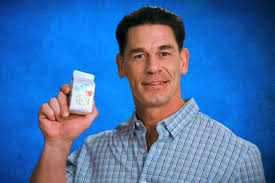
Mr. Diabaté responds with a calm, good-natured shrug. He tells her they already know.The unassimilated, or at least Mr. Diabaté, did not make this dicosvery, as Carol did, by coming upon wrapped and chilled human body parts in a warehouse. They got the news carefully packaged, and couched in calm, “reasonable” terms, delivered by a smiling celebrity spokesman holding up a milk carton.
And so, they adjust. They swallow cannibalism and the prospect of human extinction as the new normal. And, conveniently for whatever is behind all this, they continue to focus on Carol as the villain. The unassimilated most likely tell themselves that this form of cannibalism is necessary to save those loved ones who have been assimilated, to forestall their eventual death by starvation.
That’s how moral attrition begins.
The hivemind’s imitation of human contact is not perfect and cannot last. “You are not my mother,” Manousos says to the woman who’s been bringing him food. “My mother is a b*tch.” The limitations put on the hivemind, the imperative to be nice, placating, is too far from the reality of what his mother was like, so Manousos figured it out quickly.
Partying with the assimilated will stop being fun for Mr. Diabaté. Laxmi will notice her son’s far too adult self-possession. The assimilated will realize, more and more, that their loved ones are not truly their loved ones.
But the more damage is done, the harder it is for those who rationalized, those who “understood”, to backtrack. Shifting from acceptance to resistance will involve admitting, not only that their loved ones are no longer their loved ones, but that they, themselves, accepted cannibalism — one of the most powerful human taboos.
And that’s how moral attrition continues.
The unassimilated who get along by going along are going to face an untenable choice — either burying themselves even deeper in denial or admitting they have embraced something unspeakable.
And perhaps hardest of all will be admitting that Carol, whom they have ostracized, whom they either despise with righteous indignation or pity as hopelessly deluded — was right. -
A full moon last night, in the city decked out in its holiday best.
We went to hear the Count Basie Orchestra at Davies Hall, backed up by the SF Symphony. Except for Midnight Mass in a cathedral with a full choir, it’s the best way to experience Christmas music. Lots of brass, with an emphasis on the sax, and a singer in a multicolored sequined formal that, under the lights, was sending out flashes that could bounce off of satellites.
-
Write: Been doing that since grammar school.
Cook: I know more than the rudiments by now, and can make a good gumbo or jambalaya. Latkes, however, still elude me.
Manage a database or spreadsheet A fondness for logic (it was the only math class I not only passed in college, but excelled in), combined with profound laziness meant that in my working past, I would research and learn any shortcut or macro possible in Word, Excel, etc. Why take several hours to do something I can finish within minutes with the press of a button?
Debate: My dad taught us about formulating an argument and sticking to the point. He also taught us about logical and moral consistency.
Type: Well over 100 words a minute. -
We all went home earlier than usual, at about 5:00 PM, to get ready for the party. Woody called us at 6:50 to tell us that, because of a backup on Sacramento, he’d meet us at Hyde and Clay. We found him standing beside his BMW. Woody is a rather good-looking fox-faced man in is thirtes, with a goatee and a bald, possibly shaven head. He was dressed very snappily with a white shirt and dark tie that made me think he was wearing a Tuxedo until I saw his colorful, gold-colored vest. His girlfriend, Dominique, is a tall, frond-like dancer, very delicate featured, with long blond hair.
The drive to the Golf Club was lengthy. I sat in the back and watched neighborhoods spin past, Polk Street, the Tenderloin, Van Ness, Lombard, all the way out to the neighborhoods near the Panhandle with the rows of stuccoed houses. Woody talked to Michael about real estate and the wonderful things Mayor Giuliani had done in New York City. I was too carsick to say much of anything except to ask Woody, after he’d expounded about how MAGNIFICENT New York is now, if anyone could afford to live there. He allowed as how it was a bit expensive, then went on about how concerned he was about certain liberal elements in San Francisco’s current city government, and the possibility of a mass exodus if they pass any no-growth measures. I refrained from observing that there has already been a mass exodus of the middle and working class over the past ten years, but it took an effort. I did demur once, pointing out that, after the Amadou Diallo shooting, I doubted black New Yorkers felt safe walking there at night, but Michael changed the subject and I fell back into sullen silence.
The conversation turned to the much more congenial subject of Dickens. Woody is taking part in a local festival where people wander about playing characters from Dickens — rather like Ren Fair, another institution Woody is involved in. (That was how he met Dominique — through sword fighting at Ren Fair.) Woody is going to play half of the two gentlemen who visit Scrooge asking for “some provision for the poor.” We traded Christmas Carol quotes until he pulled into the long, elegant driveway of the San Francisco Golf Club.
-

I suggested we go see Beetlejuice, which was playing between Fifth and Sixth. “I don’t think there’s any theater around here we want to go to,” Tim said, but I convinced him. The previous movie, Friday the 13th Part 7, was still playing, so we had to wait in the tiny lobby until it was over. The theater was almost full when we did go in, so I guess everyone had paid for both features. We ended up way up front, in the fourth row.
The audience was rowdy, but not menacing. The theater looked as old as it’s name “The Electric”, suggested. There were roccoco reliefs on the walls of effete young men in Roman dress, and holes and stains on the ceiling.“The Electric” did, indeed, date back to the silent era, but its name was relatively new. According to this website, the theater started as the Maio Biograph, then the Circle, then the Newsreel, then the Crest, and only after that, the Electric. Now it’s The Crazy Horse “Gentlemen’s Club.”
It was the movie theater closest to where we lived, practically around the corner, on a section of Market that was profoundly run down and depressed (it still is.) Most of the people attending were likely neighbors, but not our closest neighbors, not on Tehama, which back then was being settled by 20-something artists and Silicon-Valley Gold Rushers. I remember the audience as, not older than we were, but wearier and in older clothes.
The “rowdiness” of the audience was the kind I like, which involved comments about the action, loud expressions of approval and disgust, and occasional instructions yelled at the characters. -

This is not a review of the new Apple series by Vince Gilligan, though if it were, it would be a good one. Rhea Seehorn’s performance, the writing, the cinematography, the sound track, all of it is excellent. But this piece is less about the show than about the reaction to its lead that I’ve seen from commenters online.
Especially male commenters.
So, be warned, here be monsters in the form of, not only a feminist perspective, but spoilers. If you haven’t watched this so far smart, wonderful science fiction series and would rather go into it clean, stop reading now.Plur1bus could be described as yet another post-apocalyptic zombie series, except that the zombies, instead of groaning and lunging at non-zombies, smile a lot and ask how they can help. In the first episode the main character Carol Sturka (Rhea Seehorn), a wildly succesful romantasy author, witnesses a zombie takeover. It arrives in the form of an extra-terrestrial infection that, for a few minutes, freezes most of humanity into twitching, rigid convulsions. The resulting chaos — head injuries, blood loss, car and plane crashes, fires, drownings, etc. — kills millions, including Carol’s wife. When it’s over, all of the remaining human population on earth, except for a handful of the immune, have been melded into a single hivemind.
A very happy hive-mind, Carol is told, and one that insists it has her best interests at heart. She’s assured that all the combined intellects of Earth’s scientists will be working hard, from that night on, to figure out what went “wrong” and how they can get her and others like her to join them.Whether she wants to or not.
Carol’s fight against this “benign” agenda is complicated by the fact that, if she loses her temper and yells at an individual body in the hivemind, the whole hive once again freezes worldwide for several minutes. This results in more car and plane crashes, injuries, etc, and millions more deaths, all of which are blamed — by many of the other unassimilated humans and quite a few viewers — on Carol. A form of emotional blackmail familiar to most women is thus writ large.
Which makes Plur1bus a fascinating examination of how even the most clear-eyed, justifiable female anger is treated as a pathology. It’s practicaly a Rorscharch test revealing how many male viewers — and some female viewers — react to persistently uppity women.
So far I have seen Carol described as “damaged,” “fighting inner demons.” ” and “her own worst enemy.” She is, some viewers have commented, “self-absorbed.” “narcissistic.” And, of course, she is a “Karen.” (I suspect writer Vince Gilligan chose her name for its similarity to that term.)There is little indication she is any of these things. True, it’s established early on Carol has a drinking problem that resulted in a breathalyzer being installed in her car, but if she’s an alcoholic, she’s a functional one. At a book reading in the first episode she handles herself beautifully, interacts with her fans with grace, courtesy, even kindness. Only after she’s left the event do we learn Carol is bitterly unhappy with the direction her career has gone and considers her successful fantasy series “mindless crap.” Once everything falls apart, and she finds herself the only person in the United States who’s not been assimilated, she goes on a brief binge of drinking and watching DVDs of Golden Girls, but hey, who wouldn’t? (She’s had to bury her wife in the back yard, for God’s sake.)
By the end of the fifth episode, Carol has displayed every aspect of a heroine. She is smart, resourceful, compassionate, and profoundly principled. Her fury at the hivemind is not merely because of its impact on her own life, but because it has robbed the humans around her of agency. In one especially telling episode, she prevents a woman in the hivemind from being used by an unassimilated man who sees the passivity of the hivemind bodies as an opportunity for sexual gymnastics.
And yet, I keep hearing Carol described as “unlikeable,” and her attempts to fight back against the eternally smiling hive denounced as “out of countrol”, vicious, mean, etc. The force that resulted (according to the script) in almost a billion human beings dying is, some viewers have speculated, actually the good guy because it’s erased all racism, crime and warfare. Carol’s attempt at learning the truth by drugging one member of the hivemind and inadvertantly causing a dangerous heart attack is, on the other hand, cited as proof that Carol is the true villain.Why can’t she just be nice?
I can’t say for certain what direction this series will go, but I am reasonably sure of one thing. No successful 21st century screenwriter is going to promote a story with the moral being “this angry lesbian needs to calm down and relax and enjoy being assimilated by a hivemind.”
It’s possible, I suppose. This is, after all, the Age of Trump. I may be wrong.
But I doubt it.


 Pam Troy