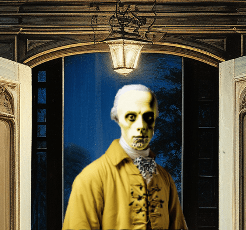
After he visits one family, he is sure to knock on the door of their closest neighbor.
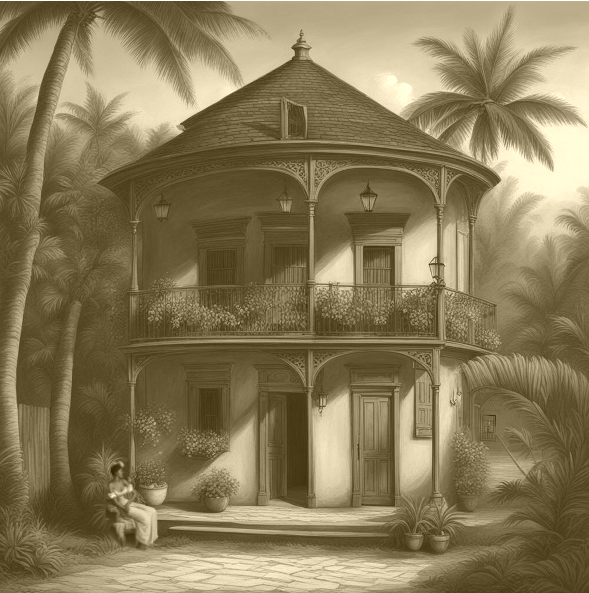
“George Glaspell, who owned the general store, looked sideways, grinned, and asked in a voice just above a whisper if he’d yet gone north to the Shards? ‘The new house there, Miss Emmeline’s, is quite legal. Dr. Gilmartin checks the girls regular.’ He winked.”
Most of the girls aren’t local.
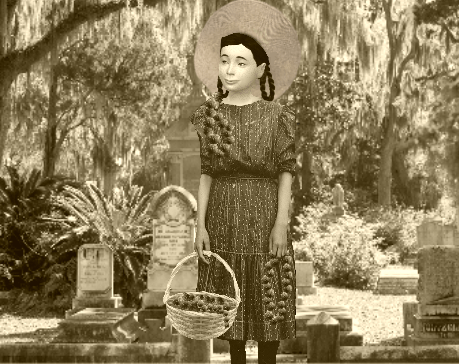
“The ghost did not step back so much as drift like a patch of fog, and Laurette noticed he was not actually standing, but floating, his legs slightly bent and close together, the toes of his boots inches above the floor. She hopped off her chair, popping the rest of the cookie into her mouth, chewing and swallowing, as she hurried around the table to get a closer look.”
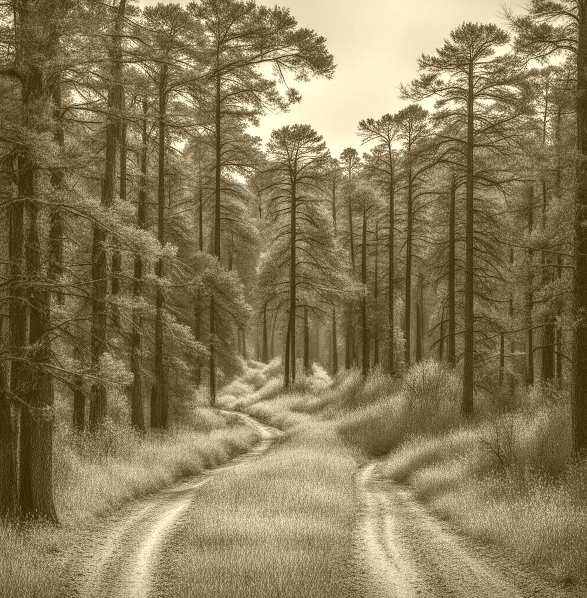
“The Shards had none of the dark lushness of the western forests. Even the trees, most of them pine, seemed pale with thirst, and the tall balls of brush edging the road were harsh tangles of whip-like branches and dusty leaves that buzzed with insects.”
The brothel, the Broken Bottle tavern, the whipping post, and the poisonous well called Deep Gertie are in the Shards.
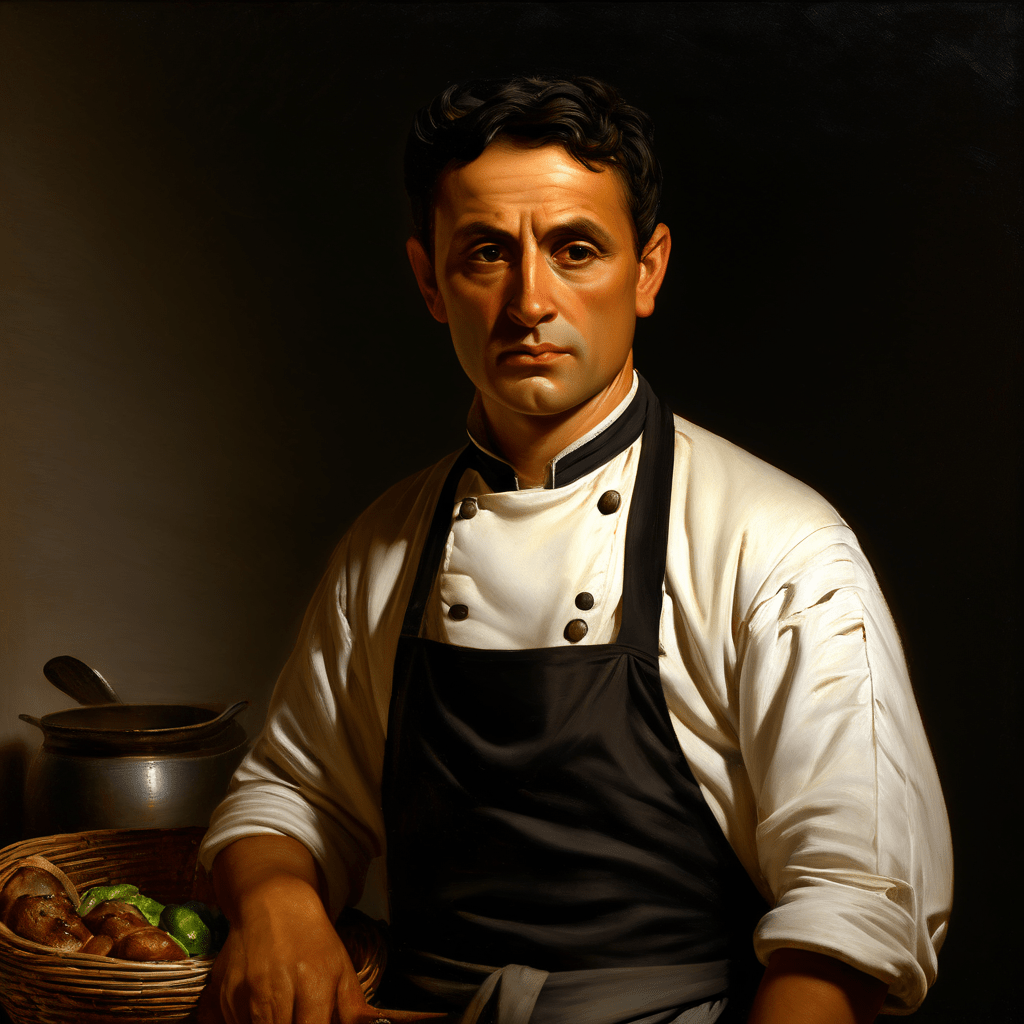
CHEF AMADEO ROSELYN
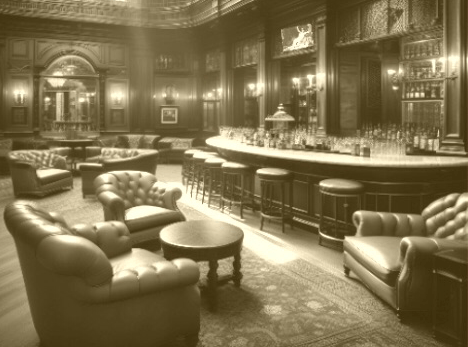
I have a distinct image of my main character of All Is Lost. This is as close as AI can get to him, which means it’s less my image of ugly, small, belligerent Amadeo Roselyn than it would be a casting director’s for the filmed version of my novel. Filmed versions almost always balk at realistically depicting characters described in books as “ugly.” I’ve yet to see Marian Halcombe depicted in movies as Collins describes her in The Woman in White, and Peter Dinklage, as great as his performance was, does not fit the image of Tyrion Lannister I got from the books. My Amadeo is not as square-jawed, and certainly not as humorless as the slightly Byronic image AI came up with.
There’s a lot of talk about AI online these days, and justifiable controversy over AI art possibly supplanting the paid work of artists. All I can say is that subtlety doesn’t seem to be its strong suit, and I find it fairly easy to spot. If I were to ever have the option of an illustrated version, I’d entrust the work to a human being who can understand things like “nuance.”

“ There were the native fetishes called ‘dub-dubs‘ found buried or hidden in rocky niches, small wooden figures now heavy with the nails that had been driven into every inch of their surfaces. Like most gestures of despair, they still retained a little power, but the spirits banished from them were merely gray veils of sadness hovering over certain glades and beaches.”
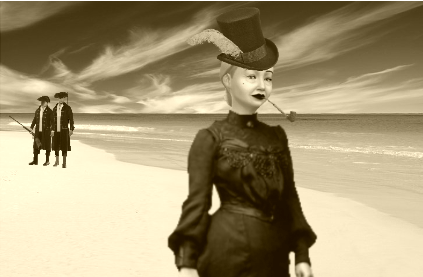
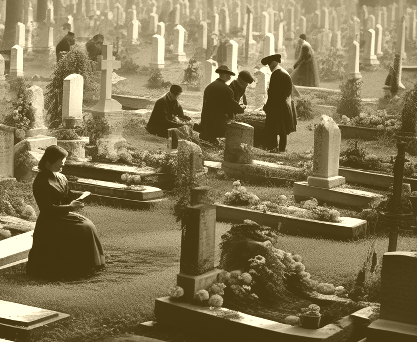
Thirty years before, according to Dr. Teach, Madame had propped the photograph of her dead husband, lit by two candles, up on his vault at Mariner’s Rest the day after his funeral. She then set her desk just inside the tomb’s open doors and conducted business there, flanked by two militia men, as prominent islanders lined up to learn whether or not they remained in favor with the Reckoners. Thus, La Reckoner had cast her husband’s shadow before her and reminded everyone of his will.
“A man is but a candle-stick
A woman is the holder…”
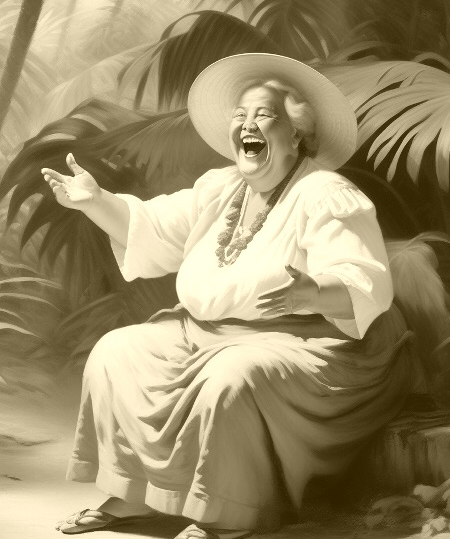
“The Light in the Cove” is a ribald ballad in English about an old woman lusting after the ghost of a young man. Everyone on the island knows both the melody and the words, though few respectable women or wise children will admit to it.
It was originally a wistful native song called “Elaro.”
But that’s forgotten.
 Pam Troy