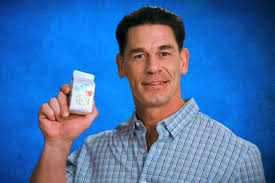
There are two major revelations at the end of Episode Six. The first is one that many viewers already suspected — the assimilated are subsisting on a liquid made, in part, from dead human bodies. The second is the logical outcome given that they cannot even kill plants. As the supplies of food dwindle, unreplenished by modern agriculture, the assimilated will all die of starvation in about ten years.
Carol goes to great effort to bring this news in person to the closest of the unassimilated to her, Mr. Diabaté. She plainly hopes it will shock him and the other survivors into resistance.
Mr. Diabaté responds with a calm, good-natured shrug. He tells her they already know.
The unassimilated, or at least Mr. Diabaté, did not make this dicosvery, as Carol did, by coming upon wrapped and chilled human body parts in a warehouse. They got the news carefully packaged, and couched in calm, “reasonable” terms, delivered by a smiling celebrity spokesman holding up a milk carton.
And so, they adjust. They swallow cannibalism and the prospect of human extinction as the new normal. And, conveniently for whatever is behind all this, they continue to focus on Carol as the villain. The unassimilated most likely tell themselves that this form of cannibalism is necessary to save those loved ones who have been assimilated, to forestall their eventual death by starvation.
That’s how moral attrition begins.
The hivemind’s imitation of human contact is not perfect and cannot last. “You are not my mother,” Manousos says to the woman who’s been bringing him food. “My mother is a b*tch.” The limitations put on the hivemind, the imperative to be nice, placating, is too far from the reality of what his mother was like, so Manousos figured it out quickly.
Partying with the assimilated will stop being fun for Mr. Diabaté. Laxmi will notice her son’s far too adult self-possession. The assimilated will realize, more and more, that their loved ones are not truly their loved ones.
But the more damage is done, the harder it is for those who rationalized, those who “understood”, to backtrack. Shifting from acceptance to resistance will involve admitting, not only that their loved ones are no longer their loved ones, but that they, themselves, accepted cannibalism — one of the most powerful human taboos.
And that’s how moral attrition continues.
The unassimilated who get along by going along are going to face an untenable choice — either burying themselves even deeper in denial or admitting they have embraced something unspeakable.
And perhaps hardest of all will be admitting that Carol, whom they have ostracized, whom they either despise with righteous indignation or pity as hopelessly deluded — was right.




 Pam Troy