


Forgetfulness
Nature
Ignorance
Malice
Greed
Flow
Fear
Death
Denial
Time
Forgetfulness…
Forgetfulness
Nature
Ignorance
Malice
Greed
Flow
Fear
Death
Denial
Time
Forgetfulness…
…of being in my sixties, but that would be a lie. As early as my teens, I noticed that “adventure” frequently involved things that happened in films, plays, operas, daytime soaps, novels, movies-of-the-week, etc. Those included actors either written out in the third scene or hired to lie limply in the background smeared with fake blood, scenes set in hospitals or police stations, fired guns, scary music, weeping parents/lovers/spouses/siblings/children, falling masonry, fires, jail cells, cold-turkey withdrawal, car chases, etc.
It further did not escape my notice that it was always my “adventurous” classmates, the ones who, at fifteen, were convinced they were savvy and worldly-wise because they knew where to buy a dime-bag, who ended up pregnant/expelled/incarcerated, etc.
So, while I have not spent my life sitting in a back room knitting, when invited on an “adventure” I always have questions about security. If not satisifed by the answer, my response is a polite “no.” My past “advantures” include surviving two killer hurricanes, a dangerous car crash, a pandemic, and a major earthquake. Adventure knows where to find me if it wants me.
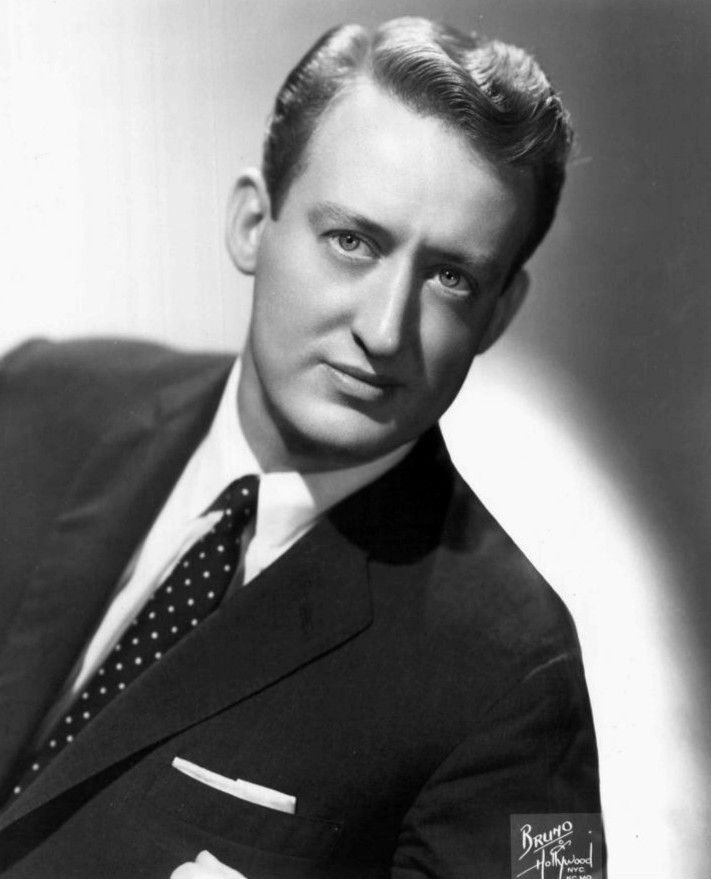
People of my generation remember him as a TV staple from the 1960s to his death in 2007, a contestant on the gameshow To Tell the Truth, and Bob Newhart’s crony in all three of his sitcoms. He had a comic timing that went perfectly with his long, rather hangdog face, but more to the point, he was personally witty. Twice he came to our house for dinner when I was in my teens, and both times his stories about theater, television, etc. made me laugh so hard my stomach hurt. (He even signed my copy of the novel Zotz! which was made into one of the very few movies where he got top billing.) A gracious, very funny man, and one of the best dinner guests we ever had.

It’s a colonial recipe, traditionally enjoyed at Christmas. They say George Washington used to make it. I know people who’ve had bottles of it going back years.
In May 2024, I piled pitted cherries into a mason jar, poured bourbon over them to cover by a few inches, added sugar, a cinnamon stick, a few cloves, and a sliver of nutmeg. Then I covered it tightly, wrote the date on top, and put it in a cabinet. Every week or two I’d take it out and rotate it to make sure everything mixed.
By Christmas we had cherry bounce to share with our friends at a holiday gathering. A splash over ice cream is delicious, and it’s also good poured into a two-ounce glass with one of the cherries dropped into it. Perfect with chocolate panettone. The stuff packs a punch, though. Even just eating a cherry or two (they are wonderful dipped in chocolate) can make you drunk.
I made four jars of it last year. We drank and gave away all but one. The remaining jar from 2024 still has plenty of bounce in it, and the flavor has smoothed into something amazing.
This year I made some more jars, and they are currently lined up in that dark cabinet, waiting to be opened at Christmas — or possibly next July.
…about 7:00 AM on average. I don’t think I need as much sleep now as I did when I was younger.
There’s also the fact I can take a nap whenever I want now.
In the early part of the day, especially after my coffee, I am always enthusiastic about my writing, happy with what I read. Inspiration is strong and hope and energy are high.
Near the end of the day, in late afternoon, usually when I begin chopping the vegetables for dinner, I start hearing that voice deep in my brain.
“Who do you think you are, writing novels at your age?” “Every word you wrote today was crap.” “Nobody is going to want to read you.”
“Shut up,” I say silently as I peel the carrots. “I have other things on my mind.”
Then I think of what we’ll have for dessert.
That does the trick.
…I’m also bit scared about my novel being published next year.
…about the extent to which women — at least of my generation — have “let go” of things for the sake of harmony with the men in their lives.
It’s gotten better with the rise of feminism. We are no longer expected to “let go of” jobs we like or people we care about once we’re married, but it remains practically a reflex. Hell, through much of the 20th and 21st century, entire books were written telling women how we should edit ourselves to “keep a man.” (And before anyone hastens to tell me what men have “let go of” for women, yes, I know men make sacrifices — but I have not seen a similar avalanche of books advising men on how to alter their behavior in order to “keep” a woman.)
Among the things I’ve “let go of” for various men, all for the sake of harmony:
Wearing certain clothes, because they are either “dowdy” or “slutty.”
Venting about problems at work after a hard day.
Mentioning a relative/friend he disliked.
Openly enjoying things he disliked/disapproved of, like certain video games, TV shows, etc.
Expressing a political/religious/cultural view he didn’t share.
I was younger then, of course. Now I’m old and cranky and shameless and married to a good man. That old feminine reflex of ‘letting it go’ has atrophied.
So the answer to the question is “I honestly can’t think of anything at the moment. Maybe later something will occur to me.”
Sometimes I love female vocalists and songwriters like Rickie Lee Jones, Sam Phillips, or Kate Bush, sometimes heavy metal, like Sisters of Mercy, sometimes The Pogues or The Rumjacks or The Chieftains, sometimes Brian Eno, sometimes Curt Mansell. sometimes Enya. Depends on what story is running through my head.
At the moment I’m feeling angry and patriotic and perverse, so below is my day’s favorite song, “What Was Your Name in the States”, sung by The Rumjacks — an Australian band. It makes me think of my city’s early days, that somewhat mythical time when California — and especially San Francisco — was where you escaped “the States” in the east and remade yourself.
…in 2023.
Venice: One of the oldest, most beautiful, most fascinating tourist traps in the world. A city impossible to modernize, navigate or map, where you can safely get lost and where police work consists of giving directions to wandering tourists in the dead of night. Rococco, slightly vulgar and brightly painted in places, laced with canals and bridges, gift shops bristling with expensive masks and tschoskes, piles of muticolored cannoli in the windows of cafes. Excellent food, but it’s not a good idea to ask for a table too close to a canal.
Florence: Unlike Venice, a working city where people live that still functions as a working city where people live. Car horns honking among the ancient buildings, traffic lights, Vespas… Somewhere in the many red-to tan warrens of old buildings is the pensione where I stayed as a student, part of an old Medici palace, but damned if I could figure out which one. “I don’t want to constantly be visiting cathedrals” Michael had warned me before we left San Francisco, but he couldn’t seem to pass a single one without wanting to go in to look around. We stayed in an ancient building which had for a while been a 20th century monastary, now a hotel. Ours was a spacious, windowless suite with arched frescoed ceilings and a modern kitchenette so some past monkish resident (I pictured him as an earnest young man in a brown cassock and horn-rimmed glasses) could use the microwave to heat his solitary dinner in between meditation and prayer.
Pompeii: A sunlit walk through what amounted to a graveyard. The most haunting sight for me was not the plaster casts, but the beautiful black concrete floor of a villa’s courtyard, flecked with silvery chips of mica and as smooth and polished as it had been before the eruption. This was, we were told, so that someone carrying a lantern at night could easily navigate by the lampight catching the mica. I imagined how familiar, even comforting that pattern on the floor would have been to a resident over two thousand years ago. Then I imagined the skinny, battered feral cats who infest Pompeii running and stalking across it in the empty city at night.
Capri: Another joyful tourist trap. Stunningly well-dressed and wealthy tourists, scarily narrow roads, many fat, indulged and calm stray cats, especially the one that decided to sit and groom itself in the middle of the road while our macho, burly, Mastrioni-like guide pleaded with it from the driver’s seat. “Oh, kittykittykittykitty…” (After a minute or two of this, the cat, a long-haired gray tabby, glanced at us and magnanously strolled out of our way, tail in the air.) Getting up before dawn to see the Blue Grotto, eating an incredible arugula salad for lunch, drinking wine on the balcony of our hotel at dusk. A few mosquitos, but the wine and view were so good we really didn’t care.
Rome: More honking cars and vespas among ancient piles, occasional Roman era rows of cordoned-off ionic or corinthian columns, nighttime streets filled not just with tourists but with students, and so many gelato shops, pizza shops, olive oil shops… The biggest , best change I noticed from my student days were the many young women I saw walking by themselves at night on the streets of Rome and yet unmolested and unharassed by obnoxious men. Charming residents eager to show off their city, who confidently answered “yes” if we asked if they spoke English, then offered incomprehensible directions in a version of it we could not understand. Art museums where, quite possibly, my artist great-great-grandfather, a successful 19th century artist, sat and sketched copies of Renaissance paintings. The closer one got to the Vatican, the more serious young priests one saw with briefcases, usually walking alongside older men in black cassocks. The young nun in the Vatican shop who, except for her habit, looked like every other young woman working in a tourist shop, obviously bored and tilted forward, her elbows on the counter as she scrolled through her phone.


 Pam Troy