“This ‘Main Room’ was a close, shadowy, cluttered chamber. The first thing Amadeo noticed was the elegant bar, the second, what was plainly the room’s presiding spirit hanging behind it, a brightly colored portrait illuminated by two lamps. Amadeo stopped for a moment to stare.
The painting depicted a decapitated man seated at a table and toasting the room with a tankard made from a human skull. This convivial gent’s head lay on its side in a pool of blood on the rough boards at his elbow. The artist had done a fine job of making the eyes of the head alive and intelligent, its smile white, its sodden black beard tied into strands with blue ribbons, and tangled like the arms of a squid in the crimson puddle.”
(To see The Captain — if you really want to — you must click the link on his name and enter the toast “tothecaptain.”)
“I am so stupid sometimes,” she said. “I believe one day I will drink the wrong cup of tea. I will utter the wrong word. I will take the wrong step. And it will kill me. Or it will kill you. Or it will destroy everything. Life is like that, Amadeo. It only takes one mistake to…”
His arms around her had tightened, and he’d kissed her. “Oh, Hortense. You must not think such things. I would never allow that to happen.”
Yesterday, I deviated from my usual route on my daily walk. When that happens, I am almost always lured off into a longer ramble than I expected. It was the word “Dumplings” on a sign that diverted me. I am always interested in dumplings. I crossed the street to check out the little restaurant, and realized I was in a familiar place. Union Street. Cow Hollow. For several years, I walked down that street every morning, five days a week, to work as an “administrative assistant” at H&C, a high-end, family owned real estate firm on the corner of Webster and Union.
H&C as I knew it is no more. When I worked there more than twenty years ago it sold houses and condos to rich people. Now it is strictly property management with offices on Sansome. The rambling, obviously-once-a-private-home offices on Union and Webster are today occupied by a law firm that has covered the windows and put a “By appointment only” sign on the door.
The buildings on Union are the same, but most of the busineses have changed. Only the Bus Stop Sports Bar is recognizeable and, at the end of the block after Webster, the Union Street Coffee Roastery, which was closed yesterday for some reason. I paused to contemplate it and imagine my own ghost lining up inside for a caramel macchiato to carry back to the ghost of my desk at the ghost of H&C.
Most of the people sitting at tables in front of the renamed cafes and restaurants are no longer my age. I understand why older people get angry at change, but I also know it’s unreasonable. The world is constantly being reshaped by new hands. Accept it. Don’t become an old woman shaking her fist at a cloud.
Still, I miss the boutiques, gift-stores and bookshops that used to line Union Street, simple businesses selling things that were arranged on shelves, objects you could touch, smell, pick up and examine. I miss Solar Light Books, with its tarot cards and its two cats, the shops selling soap, shoes, tschochkes — I even miss the restaurant that gave me food poisoning. Most of the signage I see on Union Street now contains words like “wellness” and “beauty” and would require explanations if I went in to ask.
But there is also a place that sells dumplings. There’s that.
I retraced my steps in a pleasant fug of melancholy, and walked up Octavia towards Lafayette Park. As I passed the Spreckles mansion I looked up past its green hedges to see a face carved under one of its balconies, grinning down at me and rolling out its white tongue.
“My descendants reading this a century from now, I wonder — is the Besquille still danced on the island in 1984? If not, Touperdu has become a sadder, if less wicked place. Read, my sons, and envy your ancestors.“
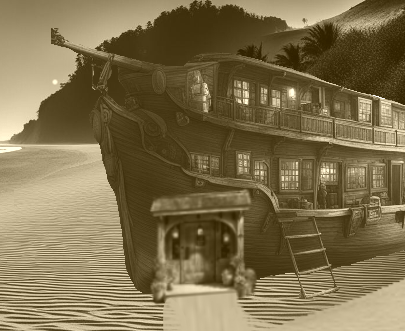
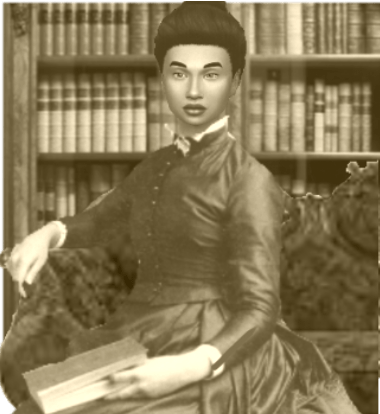
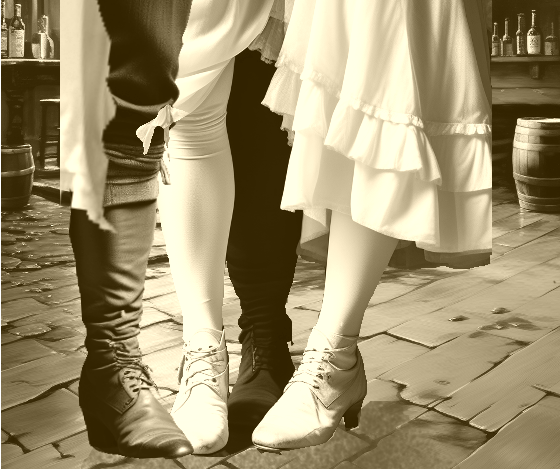
Recently, I discovered AI generated images. I think every now and then, on Thursdays, I’ll share an image I’ve created, inspired by my novel All Is Lost.
Herewith — The Besquille, an island dance that involves a lot of stomping, whistling, and accordion music.
The Besquille consists of five rounds. Only the first three are done in polite company.
We’d intended to walk back to the hotel from Circular Quay through the Botanical Gardens, but we ended up going down McQuarrie, a beautiful, shady street lined with old, handsome, golden-colored civic buildings — Sydney Hospital, the BMA, even a small house apparently used for storing visiting celebrities. We stopped to visit the New South Wales State Library, set magnificently back on a street called Shakespeare. On a traffic island in front of it is a statue of The Man Himself on a pedestal and below him Hamlet, Romeo and Juliet, Portia, and Falstaff.
Like all of the old buildings in Sydney it the library is gold. It is enormous. It is beautiful and rambling. Echoing halls, impossibly high ceilings, a map of Australia on the marble floor of its lobby. We paused to stare, awed, at an enormous room of old fashioned stacks, then wandered downstairs, to more broad halls, exhibits of old Shakespeare folios (or facsimiles of old Shakespeare folios), a wall of small lockers, so shiny they looked polished, a few scattered formica tables where people, most of them high school or college age, sit with their laptops, and another smaller, more modern library, a sort of reference room mostly filled with more people staring at computers. Upstairs was a wonderful bookstore, where a thin, debonaire bookseller in her fifties with abundant brown hair helped Michael find materials on Frank Hurley. It was near the end of the day, and an announcement declared the library closed. As we left we passed through the locker room we’d seen earlier. All the young people had folded up their laptops and were opening the lockers and taking out belongings.
***
On our walk through the twilight, we were going down some back street when we passed a police station. Occupied sleeping bags lined the pavement in front of it, and the vacant lot nearby. The homeless apparently sack out for the night near the police station, which would seem to indicate a sensible and humane policy of not arresting the homeless for being homeless.
After Midnight Mass, there was the usual confusion of departure as carriages edged past each other, drivers holding up their whips in salute. Their carriage, unlike the others, turned down dark, silent Drum Street, and Amadeo rested his head against the backrest, looking towards the bay and at the stars.
They were passing the closed stalls of the market when Corl said, “Look sir,” and pointed towards the blackness of Sanctuary Bay. “The Little King is coming.”
Teach had mentioned this to him. Every Christmas, in the dark hours of the morning, the Out Easters brought the Holy Infant into Saint Nicholas.
Amadeo had thought Pinny still asleep, but she sat up in his lap. “Oh! Papa, can we see?”
“Cher, it is late, and your mother is tired. If we wait too long, Papa Noel will find your little sister sleeping alone and leave only one stocking behind.”
A distant “pop,” and what looked like a sputtering star rose and fell over the rooftops of the market. Someone was firing Roman Candles on the beach.
“But I am not tired, Husband” Hortense said. “And I am sure Papa Noel will understand.”
“Turn around,” Amadeo told Corl. “Let us off at the Long Steps.”
“Aye, sir. You won’t regret it.”
Usually, when Amadeo thought of the Long Steps that led down to Sanctuary Strand, he pictured the summer day they had landed. He saw Dr. Teach with his ledger in yellow sunlight and heat. The steps had led down to the blazing expanse of sand where people moved about and shouted at each other. Wheels had creaked and weary horses huffed as they climbed the hill road, their flanks smelling of wet horsehair and dust.
This was not the same world.
They paused, Amadeo, Hortense, and Pinny in between them, at the top of the stairway. Someone had set out torches every few yards alongside the stairs. The stone steps, harsh and gritty in daytime, looked golden, and led down to a pool of darkness as profound as the waters of the bay. Across that black a small cluster of lights flickered on the beach near the shore. The moon was in its last quarter, and the waves glowed in white curves as they crested.
Hortense bent. “Look,” she said to Pinny. “It is like the Arabian Nights.”


 Pam Troy