‘Why, Madame,’ The man bowed to her slightly. ‘It is a little town on the east side of the island. Very pretty place, with its own market, and lovely cottages, newly built and ready for newcomers like you. It’s where many of our workers live.‘”
The Island Council is especially proud of the “workers’” cottages that cluster around plantations throughout Theodosia, freshly painted in red and white and each with their own small vegetable plot. This housing is prominently pictured and described in advertisements for plantation workers in ports like New Orleans, Naples, and Dublin, their sturdiness and comfort extolled, along with the availability of schooling for children.
The heat, the uncovered cisterns, Yellow Fever, and the houses’ actual tenants are not mentioned.
“Oh, aye, I see this one around sometimes. One of them Dudays. Things go missing when he turns up.”
Telesphore “Tel” Fortune Duday is not the eldest living Duday child. That would be Laurette, his sister who was born one hour before him in Fourche in 1873. He is, however, their eldest living son, and the one Maman considers the most promising. Her Telesphore is clever and energetic. She likes the way his eyes meet hers when she explains something to him. One can almost hear the ticking of his brain as he thinks. He plainly draws his own conclusions, but he is a wise son, and never contradicts or questions his mother. Once he is fledged and comes into his talent, who knows how far he will go?
Tel’s piercing, fiery-blue gaze will become legendary on the island, and his adult reputation as a sorcerer will surpass his mother’s, though he will be considered much more approachable and engaging than “herself.” He has a broad, humorous smile, and the knack of making the person speaking to him feel like the only person in his world at that moment.
Those who love him will call him “charming.” Those who don’t will call him “insidious.”
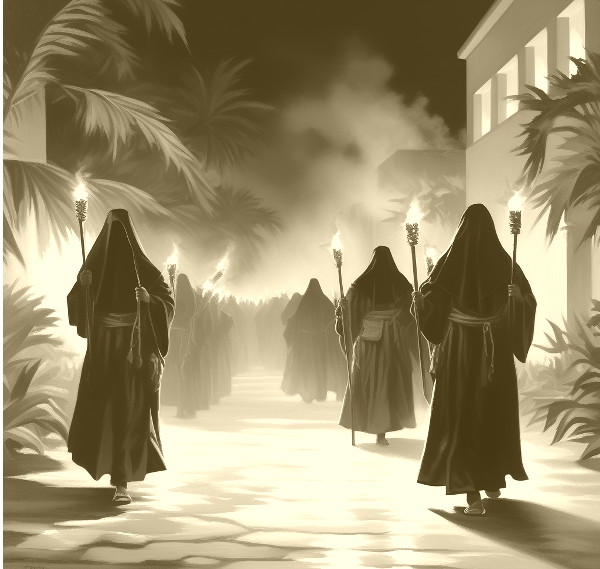
By now, they could clearly hear the nightwalkers, voices, drums and cymbals, singing a braided song. The first part had a steady, almost menacing beat, while the second part twined about it a long wail. It took Amadeo a moment to recognize the tune as one he’d sometimes heard in New Orleans.
Only when the line of torches turned onto the Gilmartin’s carriageway could he make out the words:
“Hi, ho, Nobody home, No eat, Nor drink, Nor money have we none. Ye-et, we willllll, be me-e-eery,
“No, I don’t believe the spirit of Gran’ Lamen guards his land.”
Ballou chuckled. “Do I look like a fool? I did not mean that.” He stared down at the tip of his cigar. “I meant the story of Gran’ Lamen and the hanging tree.”
Both men reflected for a moment.
Gran’ Lamen had been one African among many chained in the hold of the slaverMary Donahuewhen it foundered off Pittime. He broke loose and freed his fellows before the ship sank. Not one white man made it to shore alive.
It was said that in the wars with the natives, Gran’ Lamen wielded a club that could kill twenty savages at one swing. It was said he was eight feet tall and he had twenty-five adoring wives of every color. This harem cooked his enemies and fed them to him by hand in bloody, rare morsels, while some of his fifty children sang and the rest fanned him with palm fronds.
It was said that when the Island Council voted seven to six in 1808 to give slave smugglers a port in return for a cut of the profits, all seven members who had voted in favor were found hanged the next morning from the live oak in the main square. Gran’ Lamen, who by then was not one day under sixty, stood beneath the dangling bodies, placidly smoking his pipe. Nobody asked questions.
Amadeo and his guest contemplated this. “I would like to think it was true,” Amadeo said. “Wouldn’t you?”
“This ‘Main Room’ was a close, shadowy, cluttered chamber. The first thing Amadeo noticed was the elegant bar, the second, what was plainly the room’s presiding spirit hanging behind it, a brightly colored portrait illuminated by two lamps. Amadeo stopped for a moment to stare.
The painting depicted a decapitated man seated at a table and toasting the room with a tankard made from a human skull. This convivial gent’s head lay on its side in a pool of blood on the rough boards at his elbow. The artist had done a fine job of making the eyes of the head alive and intelligent, its smile white, its sodden black beard tied into strands with blue ribbons, and tangled like the arms of a squid in the crimson puddle.”
(To see The Captain — if you really want to — you must click the link on his name and enter the toast “tothecaptain.”)
“I am so stupid sometimes,” she said. “I believe one day I will drink the wrong cup of tea. I will utter the wrong word. I will take the wrong step. And it will kill me. Or it will kill you. Or it will destroy everything. Life is like that, Amadeo. It only takes one mistake to…”
His arms around her had tightened, and he’d kissed her. “Oh, Hortense. You must not think such things. I would never allow that to happen.”
“My descendants reading this a century from now, I wonder — is the Besquille still danced on the island in 1984? If not, Touperdu has become a sadder, if less wicked place. Read, my sons, and envy your ancestors.“
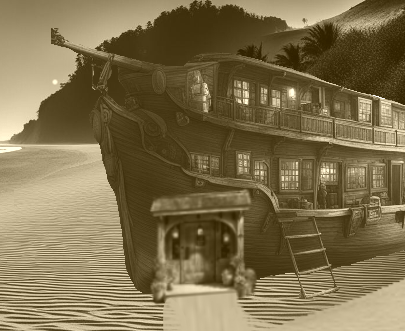
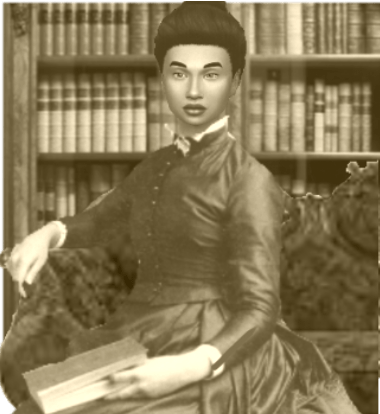
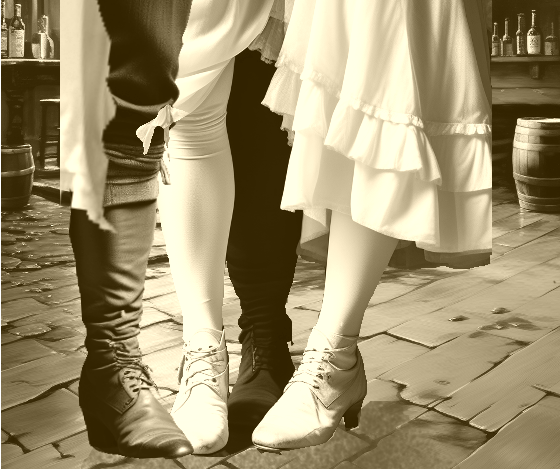
Recently, I discovered AI generated images. I think every now and then, on Thursdays, I’ll share an image I’ve created, inspired by my novel All Is Lost.
Herewith — The Besquille, an island dance that involves a lot of stomping, whistling, and accordion music.
The Besquille consists of five rounds. Only the first three are done in polite company.
After Midnight Mass, there was the usual confusion of departure as carriages edged past each other, drivers holding up their whips in salute. Their carriage, unlike the others, turned down dark, silent Drum Street, and Amadeo rested his head against the backrest, looking towards the bay and at the stars.
They were passing the closed stalls of the market when Corl said, “Look sir,” and pointed towards the blackness of Sanctuary Bay. “The Little King is coming.”
Teach had mentioned this to him. Every Christmas, in the dark hours of the morning, the Out Easters brought the Holy Infant into Saint Nicholas.
Amadeo had thought Pinny still asleep, but she sat up in his lap. “Oh! Papa, can we see?”
“Cher, it is late, and your mother is tired. If we wait too long, Papa Noel will find your little sister sleeping alone and leave only one stocking behind.”
A distant “pop,” and what looked like a sputtering star rose and fell over the rooftops of the market. Someone was firing Roman Candles on the beach.
“But I am not tired, Husband” Hortense said. “And I am sure Papa Noel will understand.”
“Turn around,” Amadeo told Corl. “Let us off at the Long Steps.”
“Aye, sir. You won’t regret it.”
Usually, when Amadeo thought of the Long Steps that led down to Sanctuary Strand, he pictured the summer day they had landed. He saw Dr. Teach with his ledger in yellow sunlight and heat. The steps had led down to the blazing expanse of sand where people moved about and shouted at each other. Wheels had creaked and weary horses huffed as they climbed the hill road, their flanks smelling of wet horsehair and dust.
This was not the same world.
They paused, Amadeo, Hortense, and Pinny in between them, at the top of the stairway. Someone had set out torches every few yards alongside the stairs. The stone steps, harsh and gritty in daytime, looked golden, and led down to a pool of darkness as profound as the waters of the bay. Across that black a small cluster of lights flickered on the beach near the shore. The moon was in its last quarter, and the waves glowed in white curves as they crested.
Hortense bent. “Look,” she said to Pinny. “It is like the Arabian Nights.”





 Pam Troy