“My descendants reading this a century from now, I wonder — is the Besquille still danced on the island in 1984? If not, Touperdu has become a sadder, if less wicked place. Read, my sons, and envy your ancestors.“
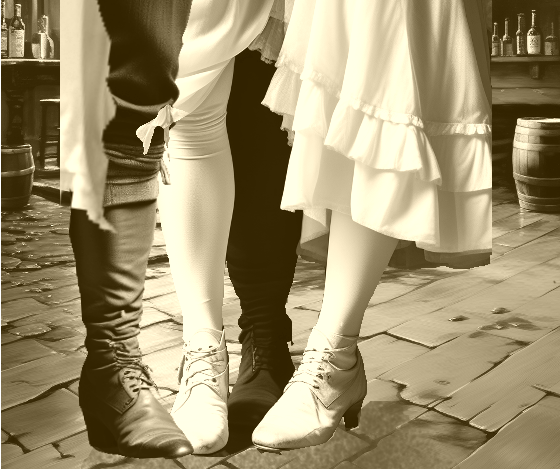
Recently, I discovered AI generated images. I think every now and then, on Thursdays, I’ll share an image I’ve created, inspired by my novel All Is Lost.
Herewith — The Besquille, an island dance that involves a lot of stomping, whistling, and accordion music.
The Besquille consists of five rounds. Only the first three are done in polite company.
This morning I did not get up in time. I kept having such fascinating dreams that I would go back to sleep to see how they ended. Never returned to the same one, though. I only barely remember a couple of them. One was about a burglar in an attic and another had me talking to Alice Walker while she lay in a hospital bed.
It was one of those vague, gray days at work that are common in between issues. Since the next issue is Locus’ 20th anniversary, Charlie wants to publish a list of the original subscribers when Locus came out in 1968. I typed the names in from the card catalogue Charlie (or his wife) had put together two decades ago. Quite a distinguished list — Robert Silverberg, of course, A.C. Clarke, Robert Heinlein, George Scithers, Chelsea Yarbro…
He wants the rest divided up into those who still have subs, those who have died, those who are still active in fandom, and those who aren’t much of anything. I spent most of my time working on this and his CD file. Charlie wasn’t there much of the day because he and Shelly had to go to Sacramento to check the issue.
How longago “two decades ago” seemed to me back then, and how short a time it seems now.
Perhaps this was when I found the photos of Charlie and his first wife in Locus’ “morgue,” — black and white shots of them picnicing with friends, lounging on the grass in a Boston park. She was pretty and slender, Charlie stout, crew-cut, clean-shaven and serious.I looked at these with the slightly disbelieving curiousity of a twenty-something examining a youthful photo of an “old person.” (Charlie was fifty-one in 1988.)
1968? That was a lifetime ago! I was TEN that year.
I wish I could rememberwhat I was typing these lists into — Wordstar? More likely it was Dbase, the first database I ever used, or tried to use. I remember it as nightnarishly clunky and non-intuititve.
We’d intended to walk back to the hotel from Circular Quay through the Botanical Gardens, but we ended up going down McQuarrie, a beautiful, shady street lined with old, handsome, golden-colored civic buildings — Sydney Hospital, the BMA, even a small house apparently used for storing visiting celebrities. We stopped to visit the New South Wales State Library, set magnificently back on a street called Shakespeare. On a traffic island in front of it is a statue of The Man Himself on a pedestal and below him Hamlet, Romeo and Juliet, Portia, and Falstaff.
Like all of the old buildings in Sydney it the library is gold. It is enormous. It is beautiful and rambling. Echoing halls, impossibly high ceilings, a map of Australia on the marble floor of its lobby. We paused to stare, awed, at an enormous room of old fashioned stacks, then wandered downstairs, to more broad halls, exhibits of old Shakespeare folios (or facsimiles of old Shakespeare folios), a wall of small lockers, so shiny they looked polished, a few scattered formica tables where people, most of them high school or college age, sit with their laptops, and another smaller, more modern library, a sort of reference room mostly filled with more people staring at computers. Upstairs was a wonderful bookstore, where a thin, debonaire bookseller in her fifties with abundant brown hair helped Michael find materials on Frank Hurley. It was near the end of the day, and an announcement declared the library closed. As we left we passed through the locker room we’d seen earlier. All the young people had folded up their laptops and were opening the lockers and taking out belongings.
***
On our walk through the twilight, we were going down some back street when we passed a police station. Occupied sleeping bags lined the pavement in front of it, and the vacant lot nearby. The homeless apparently sack out for the night near the police station, which would seem to indicate a sensible and humane policy of not arresting the homeless for being homeless.
The sky behind the buildings is like a piece of gray cardboard. The street is the same hue, so on the steep slope beyond Van Ness it disappears into the mist. Not a leaf stirs in the tree-tops. San Francisco fog is rolling in, not in dramatic billows but as a sort of creeping erasure,.
No cars. No young men smoking joints on the roof, no yoga ladies, no lively conversation in the gazebo, no squawking parrots. Just a robin two doors down on the rail of a fire escape. It hops a couple of times, then flies away.
Today I will not run my laps because my right foot has gotten sore, and I should perhaps not put too much weight on it. Instead, I will ride my stationary bike — but cautiously. I found two large screws on the floor near it, and can’t figure out exactly where they go, and I fear the thing falling apart beneath me. A trip to the ER for even a minor injury could be catastrophic for us both. At least the aspirin we ordered from Costco arrived the other day.
I just looked up at my window again. I can make out a pillar of the Golden Gate Bridge in the distance, but everything has faded. If I look carefully, I can see the texture of the wet air, tiny droplets suspended almost in a pattern.
A car just passed and its tires hiss as it goes by. On days like this in the city, water does not fall from the sky. It just appears on every surface outside. Perhaps this will burn off by the afternoon, but at the moment, the twilight seems impenetrable.
I didn’t want to repeat the mistake I made last week in taking nothing but a pair of picture magazines, Vogue and House & Garden, to the laundromat so I walked down to Tro Harper and bought a good, thick book, a Dickens I haven’t read yet, Dombey and Son. I’ve finished the first five chapters, and I’ll probably chew my way through the rest of the book this week.
Like my shopping, my laundry is done far away. I use the laundromat across the street from where Tim’s sister used to live on 21st Street.
In the laundromat everyone around me speaks Spanish and I feel like a bright yellow dot. When I go to the grocery store next door to get detergent, the clerks speak Spanish until I walk up, and they chirp in perfect English “dollar ninety-five.”
Today, when I went into the back of the grocery to see if they had crawfish for sale, the old gentleman behind the deli counter said “que lindo pelo,” and patted his head. I smiled and thanked him . As I left, I could hear him saying “que lindo, que lindo” and explaining something to the lady that worked with him. Everyone likes my hair.
I was young, I was pretty and, once a month, I went through the long, stinging ordeal of having my hair razored down into a perfectly arced buzzcut and then peroxided to a whitish blonde with blue lights. At the time, I was slender enough that the result made me look delicate and exotic rather than butch. Add a black angora turtle neck, a leather bolero jacket, tight black jeans, gold hoop earrings, lots of eyeliner, and bright red lipstick,and I ready to club South of Market. I got into at least one place for free by allowing the bouncer to run his hand over my head.
For Christmas, at Michael’s request, I made sausage Jambalaya. It’s not a dish I cook much anymore, given concerns about fat and sodium content. Last night, just as I was stirring it before serving, I realized I’d left out the Thyme. That was an accident, but I also deliberately cut the amount of salt in half. (Why even add salt when you’re cooking with ham and sausage?)
Michael didn’t seem to mind, and it turns out I actually like it better this way. It’s creamier and got a nice sweetness offsetting the heat.
Also, I made a chocolate apricot cake. And a pot of Smoking Bishop. Lovely celebration.
After Midnight Mass, there was the usual confusion of departure as carriages edged past each other, drivers holding up their whips in salute. Their carriage, unlike the others, turned down dark, silent Drum Street, and Amadeo rested his head against the backrest, looking towards the bay and at the stars.
They were passing the closed stalls of the market when Corl said, “Look sir,” and pointed towards the blackness of Sanctuary Bay. “The Little King is coming.”
Teach had mentioned this to him. Every Christmas, in the dark hours of the morning, the Out Easters brought the Holy Infant into Saint Nicholas.
Amadeo had thought Pinny still asleep, but she sat up in his lap. “Oh! Papa, can we see?”
“Cher, it is late, and your mother is tired. If we wait too long, Papa Noel will find your little sister sleeping alone and leave only one stocking behind.”
A distant “pop,” and what looked like a sputtering star rose and fell over the rooftops of the market. Someone was firing Roman Candles on the beach.
“But I am not tired, Husband” Hortense said. “And I am sure Papa Noel will understand.”
“Turn around,” Amadeo told Corl. “Let us off at the Long Steps.”
“Aye, sir. You won’t regret it.”
Usually, when Amadeo thought of the Long Steps that led down to Sanctuary Strand, he pictured the summer day they had landed. He saw Dr. Teach with his ledger in yellow sunlight and heat. The steps had led down to the blazing expanse of sand where people moved about and shouted at each other. Wheels had creaked and weary horses huffed as they climbed the hill road, their flanks smelling of wet horsehair and dust.
This was not the same world.
They paused, Amadeo, Hortense, and Pinny in between them, at the top of the stairway. Someone had set out torches every few yards alongside the stairs. The stone steps, harsh and gritty in daytime, looked golden, and led down to a pool of darkness as profound as the waters of the bay. Across that black a small cluster of lights flickered on the beach near the shore. The moon was in its last quarter, and the waves glowed in white curves as they crested.
Hortense bent. “Look,” she said to Pinny. “It is like the Arabian Nights.”
Some friends who’d visited Australia had told us we had, absolutely had to order a coffee drink called a “flat white.” After lunch at Manly Beach we asked the waitress what a flat white was, and she launched into a description involving lots of milk (not steamed) and a little espresso, concluding with “it’s the weakest coffee drink on the spectrum, cappuccino being the strongest.” So we each ordered a small and decided to enjoy them down at the shore.
We carried them back to where we’d started out on Manly beach. Different people were swimming and surfing now. The little boy I’d seen digging in the morning was nowhere to be seen, but there were several impressive turrets of sand where he’d been and who knows, maybe he was still digging somewhere behind them and out of sight. I sipped my flat white. Yes, it was delicious, but it tasted a little familiar. I lifted up the top and looked at it.
“These look and taste like cafe au laits,” I said.
Michael, who’d been enjoying his, looked disappointed. “I thought it was an Australian thing,” he said.
“Well, they’re very, very good cafe au laits,” I told him.
Gray day. The cathedral bells just struck the noon hour. Last night I became anxious because I could not remember hearing them. We’ve lived here for over twenty years, so naturally we don’t notice the carillion, but I hated the thought of yet another pocket of silence. I listened and they rang their final hour of 9:00 pm.
More Zoom conversations yesterday afternoon. My boss’s personality is indelibly stamped with her background in theater and dance. Five years ago, on a dark rainy night, a city bus grazed her. She did a spinning pirouette and kept her footing, landing in fourth position and coming away with nothing more than a scraped and bruised elbow from hitting the side of the bus. My favorite quote, from her, during a department heads meeting years ago that got rather testy — “I’m not angry. I’m dramatic!”
She’s gotten the hang of Zoom now, so the camera came on in closeup, showing her freshly applied lipstick and the scarf she’d tied jauntily around her neck and making me conscious that I was not wearing a bra and had not brushed my hair. Our film curator was in a t-shirt and looked like he needed to trim his beard.
It was a good conversation, another little nudge out of the somnolence I mentioned the other day. The world is off balance but still spinning and we will, I pray, keep our footing. I still have a job, such as it is.
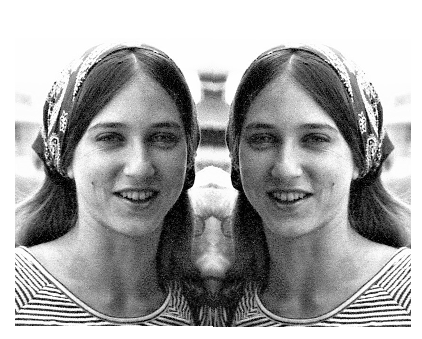
Spooky stories are part of the season. I’m convinced this holiday originated in people huddling closer to some communal fire on the longest, coldest night of the year, staring over their shoulders at the shadows and telling tales of spirits and demons. And so, I’ll tell here about my own closest brush with the uncanny. I saw and spoke with my own doppelganger.
Encountering your doppelganger is supposed to be a sign of impending death. I was twenty-seven, when I saw mine and I’m in my sixties now, so that’s obviously a myth. (One of George Sand’s lovers, the dissolute, occasionally insane poet Alfred de Musset, is said to have been badly shaken by seeing his doppelganger pass him while he was walking in a forest. He died a mere 24 years later.)
Back in the ’80s, my boyfriend and I had decided to move from Pittsburgh PA to San Francisco. He’d already done his bit by traveling to California and sofa surfing with friends until he had found a place for us. The apartment was tracked down, the lease was signed. All that was left was for me to ship our books, sell off as much as I could and, on a bitterly cold day in March, load up the car and thoroughly clean our apartment in Squirrel Hill.
This took all night, a long, depressing, discombobulating process. There’s nothing quite like scrubbing a wooden floor in an empty apartment, lit up all yellow and echoing in the dead of a black, bitterly cold night. It feels like a sort of murder. You are dismantling a segment of your life.
By the time I finally walked to my car, bearing the cat in its carrier, the sun was coming out – or rather, its smudged version behind the solid gray cloud cover. I scraped some of the ice off the windshield, climbed in, and began the trip to North Carolina, where I would spend a week with my parents before starting the cross-country journey.
I felt awful, of course. Weak. Tired. Cold. Horribly, horribly thirsty. I wanted a fruit drink so badly that when I pulled up to a McDonald’s drive thru and learned that all they had left was grapefruit juice, I settled for the pink stuff, even though I hate the taste and drinking grapefruit juice typically gives me a pounding headache. In this case, however, it tasted wonderful, which was a strange experience – the taste was the same, but I liked it. And instead of making my head hurt, it made me feel significantly better. I drove for another hour, then felt myself beginning to lose steam.
By this time, I was out on the highway, driving across a cold, snowy landscape beneath a leaden sky. If I continued, I was, without question, going to pass out at the wheel. Fortunately, I spotted a rest area up ahead, one of those places that truckers use, and I pulled into it, parked, and sat for a moment, weighing the danger of falling asleep there as opposed to falling asleep while driving. I was young, female, alone except for a cat securely locked in its carrier. The rest area seemed fairly busy – trucks were coming and going constantly, the truckers didn’t appear especially rough or menacing, and in any event, I’d locked the doors of my car.
But what if I were to hear a tapping on the window, and wake up to see someone discreetly pointing a gun at me? What if I froze to death, fell asleep and just didn’t wake up?
Something might happen to me if I took a nap here, but something would happen to me if I tried to drive in my current state.
Resigned, I crossed my arms and settled back in my seat. As I took one last anxious look around, I heard someone say, “Don’t worry.”
I looked to my right and, with no surprise or alarm, saw myself sitting on the passenger side. This was even more of a physical impossibility than it sounds since the passenger seat was piled high with boxes. Nobody could sit there. But there “I” was, leaning forward slightly in the seat to catch my own eye, looking friendly, calm, and slightly concerned.
“Sleep as long as you want,” “I” said. “I’ll keep an eye on things.”
Well, thank God for that, I thought, as I closed my eyes and drifted off.
I woke up about two hours later. In my half-awake state, I turned to let “myself” know that I was alert again, and for an instant, I was baffled to see nothing but boxes in the passenger seat. It took be a moment to get my bearings and explain to myself (internally) that “I” could not, in fact, have been sitting next to myself in the car.
What mattered was that, once I was fully awake, I felt much, much better and was confident I could make it to North Carolina without having an accident. I started the car, set off, and reached my parents’ house safely.
Since then, I’ve read about supposedly true cases of doppelgangers (and by this, I mean the apparition of oneself – not cases where long-separated identical twins meet each other on the street.) What’s striking about them is that they follow a pattern that lends verisimilitude to the accounts. The stories include:
An account from several hundred years ago, in Italy, where an isolated traveler on horseback was riding down a dark, dangerous highway in December. He was exhausted, and desperately worried about either freezing to death or falling prey to brigands. As he struggled to stay awake, he became aware of another rider on the road beside him. It was himself, looking quite alert and watchful. Reassured, he traveled on until he reached an inn safely.
An account from World War II, of a GI in Europe who was driving alone in his jeep at night, cut off, scared, in the dead of winter. He saw another GI by the road, stopped to pick him up, and saw it was himself. His doppelganger climbed into the jeep and talked him through the night, giving him advice on where to turn, where to slow down, how to survive. He made it to his destination safely.
An account by a sailing enthusiast who was out on the open sea, by himself in rough waters. He was taken ill just as a storm hit and was forced to hunker down on his bunk below decks, shivering, terrified, and miserably sick as his yacht pitched and rolled in the storm. At one point, he decided that he simply had to make the effort, go up to the deck and take the helm. He managed to drag himself up and saw, to his astonishment, that there was somebody at the wheel steering the ship through the storm. The helmsman turned his head and he recognized himself. When the doppelganger smiled encouragingly at him, he realized that it was all right, things were under control, and returned to his bunk. When he awoke, the storm was over and, of course, the doppelganger was gone.
Doppelgangers never seem to stick around for thanks.
Anyone reading this probably noticed the same pattern I did – cold, fear, exhaustion, and unfamiliar surroundings. My own theory is the doppelganger is a hallucination triggered by these things, rather than a helpful spirit. (Without a Ouija board, we probably wouldn’t have heard from a sailor telling us, “I thought my doppelganger had it all under control, but then I woke up and water was rushing down the steps and the yacht was sinking…”)
Remembering what led up to meeting my own “helpful” doppelganger is interesting. I’d just spent the previous weeks and the night before dismantling my old home. Bit by bit, all that was familiar – an armchair, a beloved oak desk, my bookshelves – had been sold off and carried away by strangers. The hours before my encounter had been spent scrubbing away the last traces of our lives there. It was as if the “I” who lived in Pittsburgh and worked in a bookstore had been erased, and I was in limbo between that and becoming another “I,” one who lived in California and worked for a magazine.
Then there had been that odd moment of sucking down a tall cup of a hated drink that normally would have made me ill. I can remember thinking how weird it was to be enjoying a taste I despised, and without getting that familiar pounding sensation in my temples. It was like being someone else for a moment, someone who loved grapefruit juice.
So, it’s not surprising that I would have a waking dream about my own ghost. The old version of my Pittsburgh self had been haunting me for weeks.


 Pam Troy