


it’s the upcoming election and my memories of Jan 6, 2021.
They’ll try it again. They always do.
it’s the upcoming election and my memories of Jan 6, 2021.
They’ll try it again. They always do.
We are socked in this morning. The fog has crept inland to where I can see no further than the Dashiell Hammett building a block away (Dashiell Hammett buildings are scattered all over the city. He moved around a lot, and almost every neighborhood has an apartment house pointed out by the locals as the very place where he wrote The Maltese Falcon.)
The rest is pale grayness and the distant, intermittent mooing of the fog horn. Quite a contrast to yesterday. which was bright and warm. This may burn off into a clear day by noon. It can take a lot of heat to kick up this much fog.
Our door buzzer rang yesterday, making us both jump. The cat growled and ran under the table. I started downstairs to see who it was and on the stairway I was overtaken by one of the bros coming out of their apartment. Handsome, bearded, slender and olive–skinned, like his two room-mates. “It’s all right,” he told me, smiling, “It’s just my dad. I think he locked himself out.”
Through the open door behind him I could see their empty place. “You guys moved already?” I asked.
“Yeah, Dad came by to help me get a few last things.”
“Well, so long and you stay healthy.”
“You too, Ma’am,” he said, as he hurried down. I’d glimpsed his family last summer when they were helping him to move in — a couple of curious younger siblings, Mom in a lavender sari, a large friendly family dog who’d come along for the visit and let me rub his cheeks in the lobby… The bros were considered too young and loud for the building, but I was still a little melancholy to see them go.
“Is this ever going to end?” I asked Michael last night. We were talking about the latest news. The first recorded death in the US from CV-19 was in early February here in the Bay Area, a fit, 57-year-old woman who thought she was recovering from the flu. Her daughter found her dead when she went by her apartment to check on her. An autopsy revealed she had CV-19, but had died from a heart attack, not respiratory distress. The poor woman’s heart had literally burst. Apparently blood clots and heart attacks can come with the sickness.
The World Health Organization has announced that there is no evidence that recovering from CV-19 makes you immune.
“It will end,” Michael said gently.
And it will. I have read enough about epidemics to know there have been many that were worse. AIDS, which in the ’80s was a long, agonizing death sentence. The Plague, of course, and the mysterious Sweat from the Tudor era, which made those who’d had it more vulnerable to reinfection, not less. Yellow Fever, like CV-19, would sometimes recede slightly, offering patients brief, mocking respites before moving in for the kill. Smallpox, Typhus, Cholera, all of those were deadlier. It’s just that this “now” sometimes seems like an eternity.
I find it helps to think about the bro I met on the stairway yesterday, and remind myself that for him, this place will likely just be nothing more than a slight tug on his memory. Decades from now, when he is my age, he may pass this building if it still stands and comment to someone “I think that’s the place I lived for a little while when I was young. Had to move out because of the epidemic in ’20. We threw some good parties up on the roof.”
In the kitchen I had a long, interesting conversation with Jean, one of Michael’s co-workers. She’s a jolly woman in her thirties, with shoulder-length dark hair, no makeup. She’d just gotten back from a trip to Cuba, and talked about a documentary she’d considered doing on a relative who was “not a red-diaper, but a crimson-diaper baby.”
The relative’s parents had not been actual party members, but only because her father was the bureau chief at Tass in the American city where they lived, and needed to maintain at least the appearance of objectivity. The parents, Jean said, combined their Communist views with an especiallky virulent form of New England puritainism, and as a result her relative had a constrained, paranoid, and isolated childhood. Her memories of the Red Scare were especially terrible, of government agents following her and her parents, of tapped phones and other forms of harassment. By the time she was twenty, she found herself virtually unemployable in the U.S., so she’d gone to Czechslovakia to live, then ended up in Cuba, where she remains. Now an older woman she is, Jean said, like most American expatriates in Cuba — intense, neurotic, and dogmatic.
Her life was tragic in ways Jean said she’d rather not discuss, and Jean decided not to do the documentary. It might have upset her relative and the story might distract viewers from what Jean wanted the documentary to be about — life in Cuba. Her relative, she said, seems to be one of those people who lives someplace, not because she loves the culture or langauge (her Spanish is still terrible) but because it appeals to her politically. Jean mentioned another interesting ex-patriate, an ex-CIA agent who had a crisis of conscience and defected. He’s now a travel agent in Havana.
At that time, it was still illegal for Americans to visit Cuba.
Fritz called me at work to complain that he was missing 30 pages from his manuscript. I told him I would stop by tonight and look at the manuscript. Felt in a generally growly mood by the time I picked Tim up, but I still took him to Comic Relief when he asked. Got a nice stack of comics, but I didn’t have much time to read them. I just dropped Tim off and went straight to Fritz’s place.
His phone line was busy, so I wasn’t able to get through the door buzzer, but an Asian lady let me in. (She said she liked my hair.) When I got to Fritz’s and he showed me the manuscript it turned out that, at most, the manuscript was six pages short of the first draft – and that could be accounted for by changes and formatting command differences. He is, I think, very uncertain and unhappy about being unable to read hiw own writing. I have to get down there this week and do some reading to him. That might make him more confident.
A courtly old man with a moustache and a baseball cap escorted me out, asking permission before opening doors for me. “Fritz is a good guy,” he told me.
“He’s a good writer, too.”
“I know that,” he replied, as though it went without saying.
Tomorrow I’m going to call Fritz from work to reassure him about what goes where in which chapters.
Last night was warm, which meant we slept with the fan on and I woke up frequently, walked down the hall to the bathroom, came back, took a few swallows of water, went to sleep woke up a couple hours later, walked down the hall to the bathroom, etc. A hot night in San Francisco would likely be considered pleasant in Louisiana, where I grew up. I can remember a couple of times as a teenager when I grabbed the glass of ice water next to my bed and dumped the whole thing over my head. You’d think I’d be tougher about heat. But I’ve lived here now for most of my adult life, and I no longer have much tolerance for balmy nights spent looking for a cool place on the mattress.
We had a staff meeting yesterday — by Zoom of course. Strange to hear that a few people are still going into our building. Our CEO goes there once a week to check the mail and sign checks, and the plant and building managers are using this time for maintenance, cleaning carpets, repainting, and doing repairs. I felt a bit jealous as I listened to them. Wish I could be there in that beautiful old early-twentieth century building, even if it’s mostly empty now.
As employees, we’re all pretty lucky. Those in charge seem to be doing their best and our salaries are still being paid. We’re also fortunate in that the library banks with a small financial institution actually interested in helping all its clients, even modest non-profits. I’m hearing accounts of banks like Wells-Fargo ignoring less well-heeled customers in favor of the large, sleek, and well-funded, even though assistance is supposed to be on a first come, first served basis. A rumor circulates about an executive at another small library phoning their big, famous bank to ask about assistance and being told “We’re not even accepting paperwork yet. Call back tomorrow morning and we’ll send you the documents.” She called first thing in the morning and learned all the assistance had already been given out to a bigger, wealthier customer.
Another Zoom meeting yesterday afternoon with our film curator, talking about next week’s film discussion. His husband could be seen in the background through an open door moving about in what was plainly their sunlit kitchen. After we’d hashed out how we’ll handle the zoom meeting next Friday, Matt’s spouse came over to show off the two perfectly baked loaves of bread he’d just taken out of the oven. They live in Oakland in a house that has an unusually large, narrow back yard. “I think this used to be a goat farm,” Max said. That back yard is a garden now, and they grow their own vegetables and herbs.
I’m enjoying The Mask of Apollo, my bed-time reading these days. There are occasional over-large chunks of dialogue-driven exposition — a frequent flaw in historic fiction — but the personality of the actor narrator is deftly and believably conveyed, the classic ego of a star. My favorite passage: “The Amazons is one of Theodektes’ better plays, and won the poets’ prize. He had ridden over from Athens, and was so pleased with us that he never said a word about the places where I had sharpened up his lines.”
I rode the Eight every morning. It was a pretty painless, brief trip (about 15-20 minutes) from downtown San Francisco to San Bruno Avenue, a predominantly Asian/Hispanic neighborhood. By the third stop (SOMA), I was usually the only non-Asian on the bus.
One afternoon on my way back to downtown from teaching, I sat next to a round, elderly, very cheerful Asian lady who seemed to speak very little English and who, out of the blue, offered me a small pin, a butterfly fashioned from blue and pink thread. At first I thought she was offering it for sale, but she made it plain it was a gift and she wanted me to pin it to my lapel. I did, and she smiled, vigorously nodded her approval then stared ahead, apparently satisfied. She got off at the next stop. I never saw her again.
It’s possible she was a grandparent to one of the children I taught, and recognized me from the school, but to this day I’m not sure why I warranted the butterfly. I still have it.
Monday night we went to a party in Bernal Heights. A friend drove us, parking the car on a sloped little street near a seedy grocery store. The hill we were on offered a panoramic view of a tangle of highways and roads about as pleasant to survey as basement pipework.
Bernal Heights retains the appearance of being low rent, but I suspect proeprty values there are just as outrageous as anywhere else in San Francisco. The house we were visiting was one of those hillside places that seems almost built into the surrounding slopes and foliage. Just walking up the steps to the door, I saw a beautiful mossy brick path leading into a shady green garden.
The house itself was the kind of place I dreamed about having when I was a teenager. Cozy, dark, idosyncratic, with roughly-hewn walls and beams, exotic carvings and dcecorations, and worn looking furniture. The hostess was slender, blonde, very serious, the host a squarjawed, dark man with a ponytail. He was overseing the cooking in the kitchen space, which had jars adn jars of wonderful looking spices. She saw to the guests in a vaguely, anxious, uncheerful manner that left me feeling as though I’d been briefly examined and found wanting. There were already about nine people there, most of them about a decade younger than me and almost all with the enviable ease and charm of people who are doing exactly what they want with their lives. Michael and I each picked up a glass of red wine and walked out onto the narrow, planklike back porch. It was high up, but offered little view other than trees and rooftops, so we went back in.
about whether everybody likes me or not.
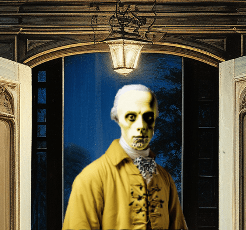
After he visits one family, he is sure to knock on the door of their closest neighbor.
I was a child when the first moon landing took place. We all gathered in front of the TV to watch it live. My parents were of that optimistic generation who imagined that by the 21st century, tourists would be visiting the moon, staying in hotels there, etc.
After explaining the terrible risks the astronauts were taking, and why they had to wear those heavy suits, what could happen to them if those helmets they wore so much as cracked, my parents told me confidently, “…and someday, you will visit the moon yourself!”
Which absolutely horrified me.


 Pam Troy